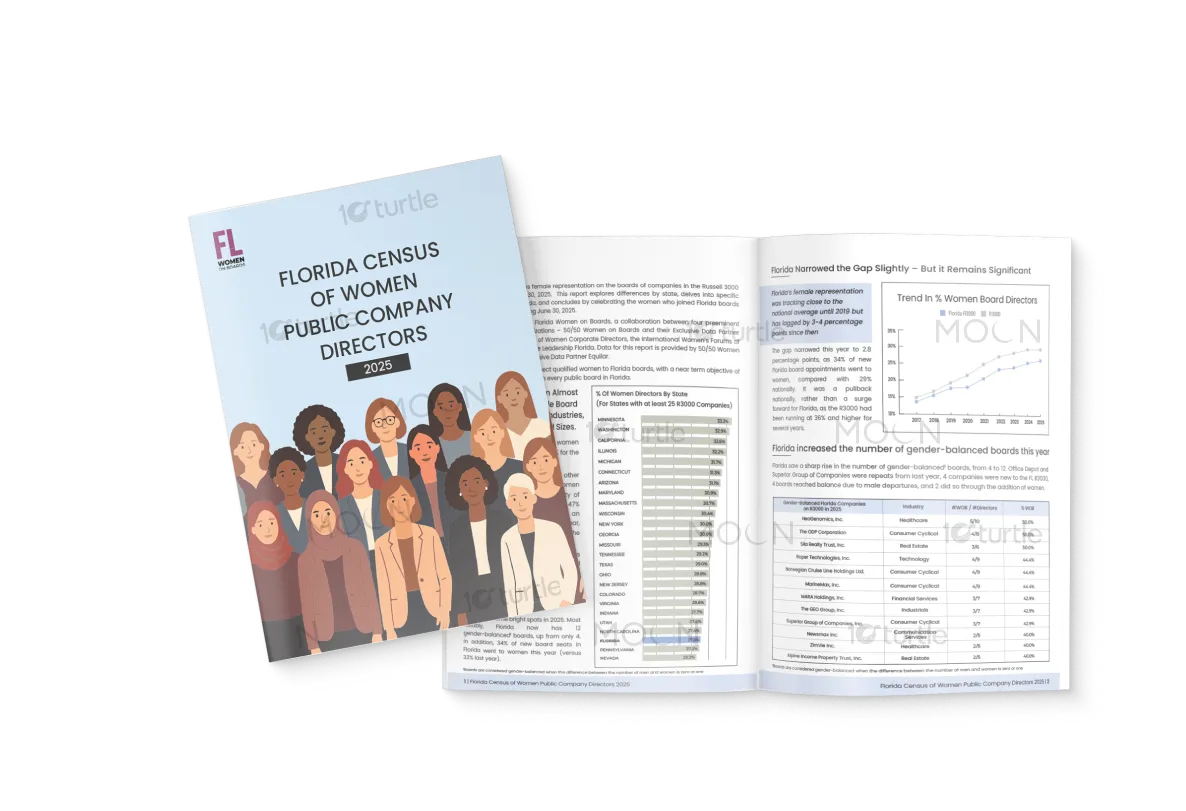
Fl Women Directors 2025 – Leadership Equity
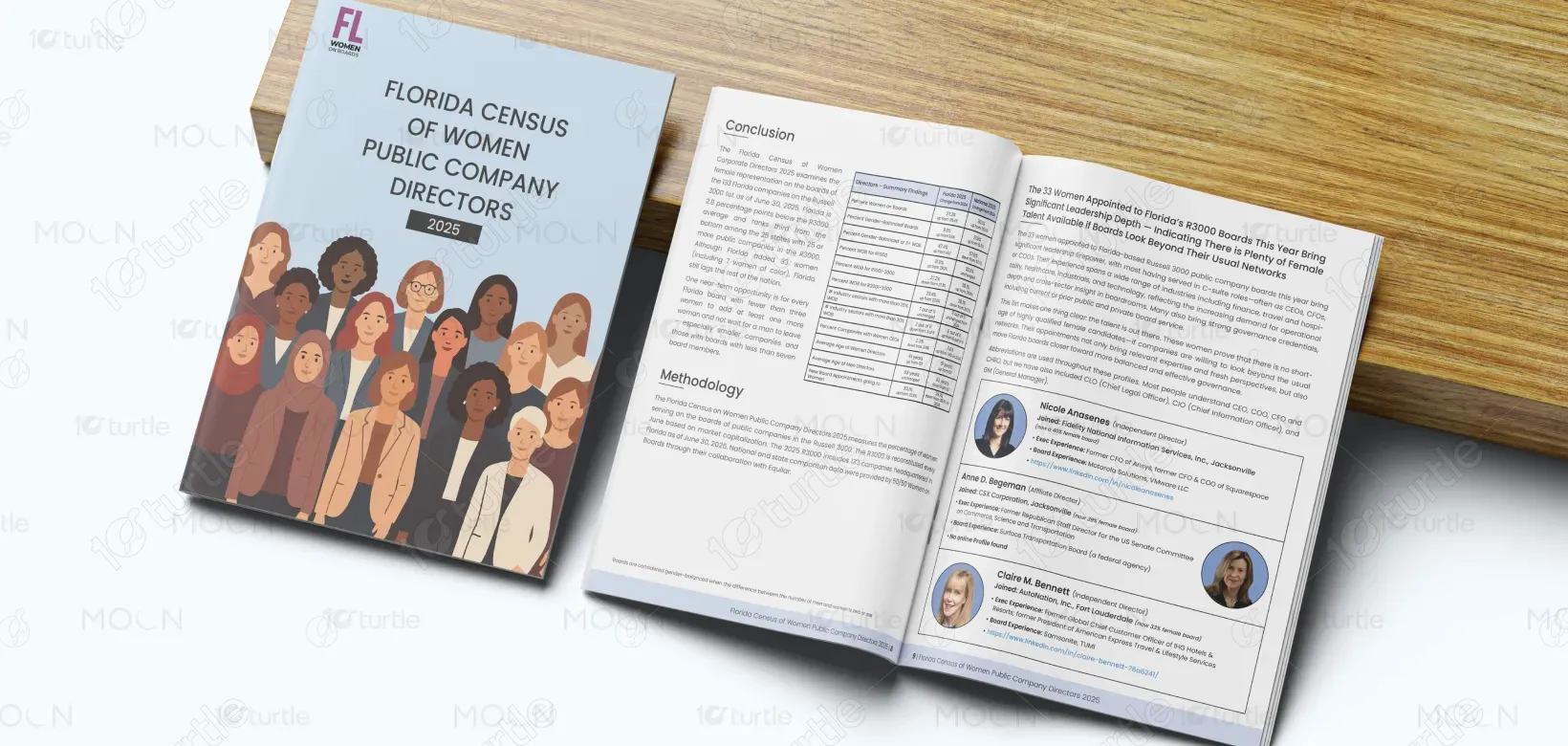
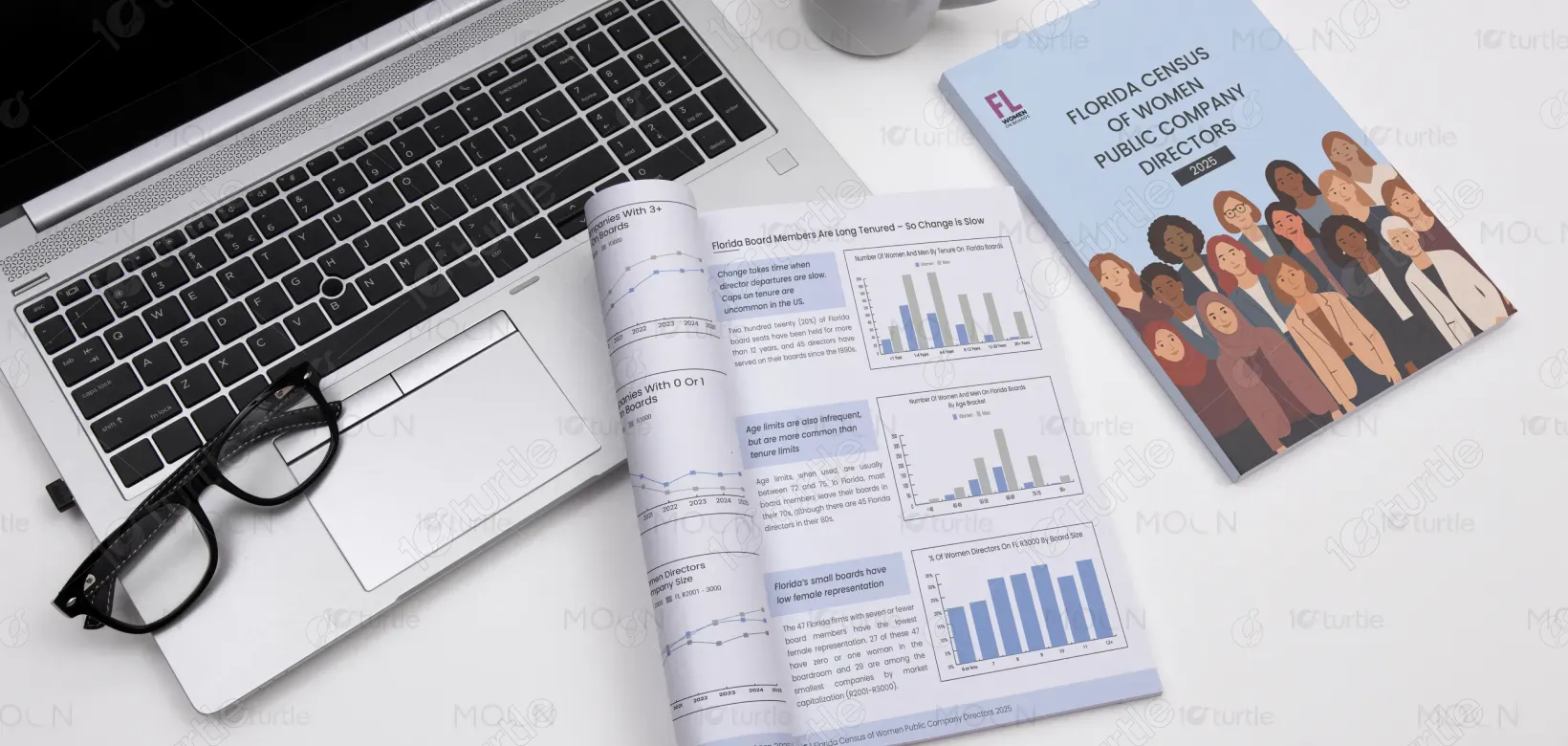
The design embraces a clean, data-driven aesthetic using a grayscale palette to emphasize professionalism and clarity. Minimalist typography, structured layouts, and bold infographics reflect authority while maintaining visual balance. The creative direction prioritizes accessibility and transparency, ensuring that complex data is easy to digest. The restrained color scheme reinforces credibility and neutrality, allowing the report’s key findings on gender representation to take center stage without visual distraction, embodying integrity and analytical depth.
Project Focus
Report Design
Graphic Design
Industry
Civic, Government & Nonprofits
Tools we used


Project Completion
2025
Key Market
Global
Brief Overview
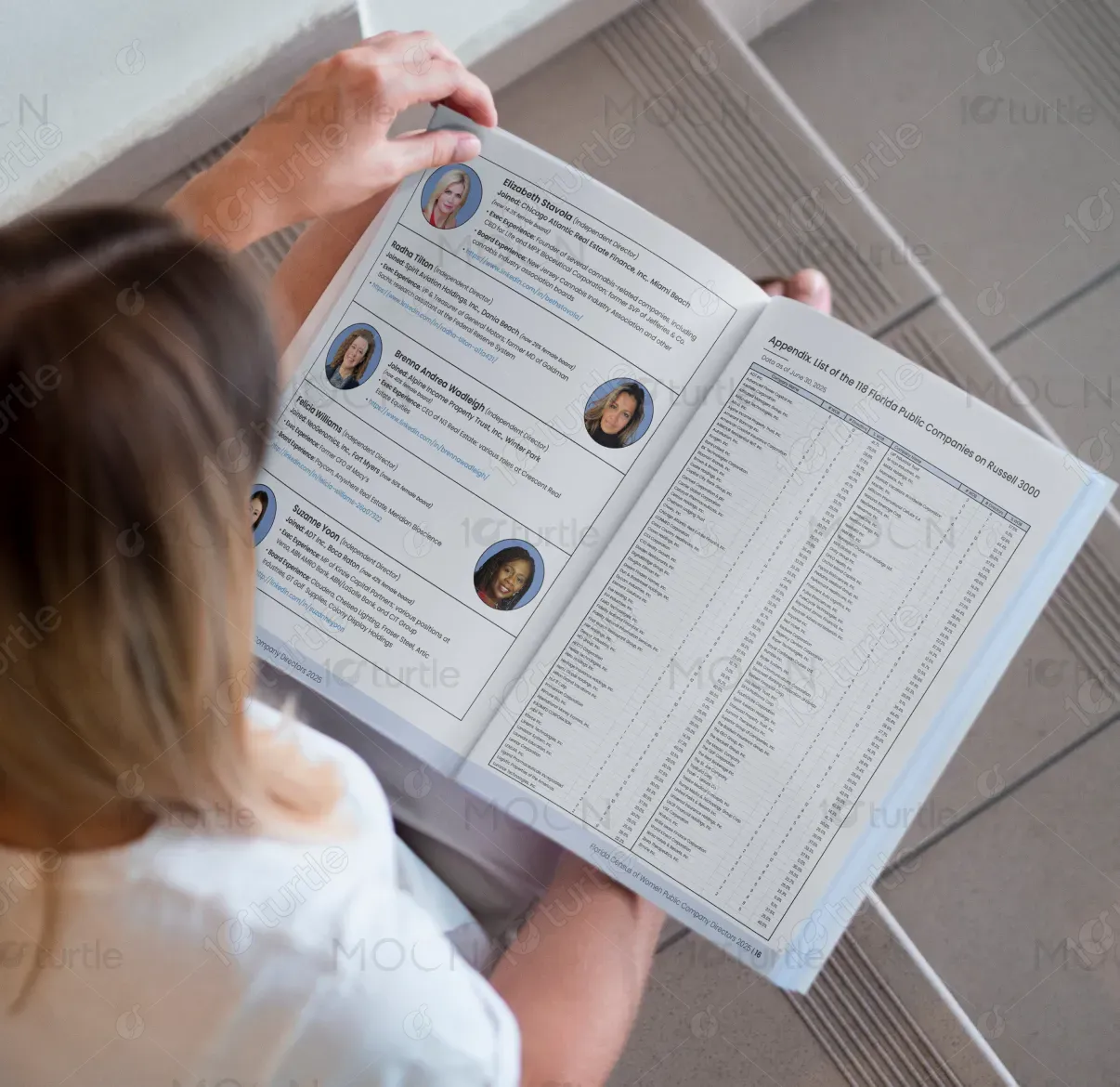
The Florida Census of Women Public Company Directors 2025 analyzes gender representation across 118 Florida-based companies listed on the Russell 3000 Index. The report benchmarks Florida’s progress against national trends, highlighting gaps, opportunities, and actionable insights for greater board diversity. Developed by four women’s leadership organizations, it serves as both a progress report and a call to action for corporate inclusivity. The report’s analytical tone and professional design underscore its role as a trusted reference in leadership equity.

Industry
Civic, Government & NonprofitsWhat we did
Report DesignGraphic DesignPlatform
-Problem
Despite growing awareness of gender equity, Florida continues to lag behind national averages in female board representation. Only 26.4% of board seats are held by women, compared to 30% nationwide. Many boards remain small, male-led, and long-tenured, limiting opportunities for fresh talent. This persistent imbalance reflects systemic barriers in leadership succession, recruitment practices, and governance culture—creating a disconnect between corporate diversity goals and real-world progress.
Solution
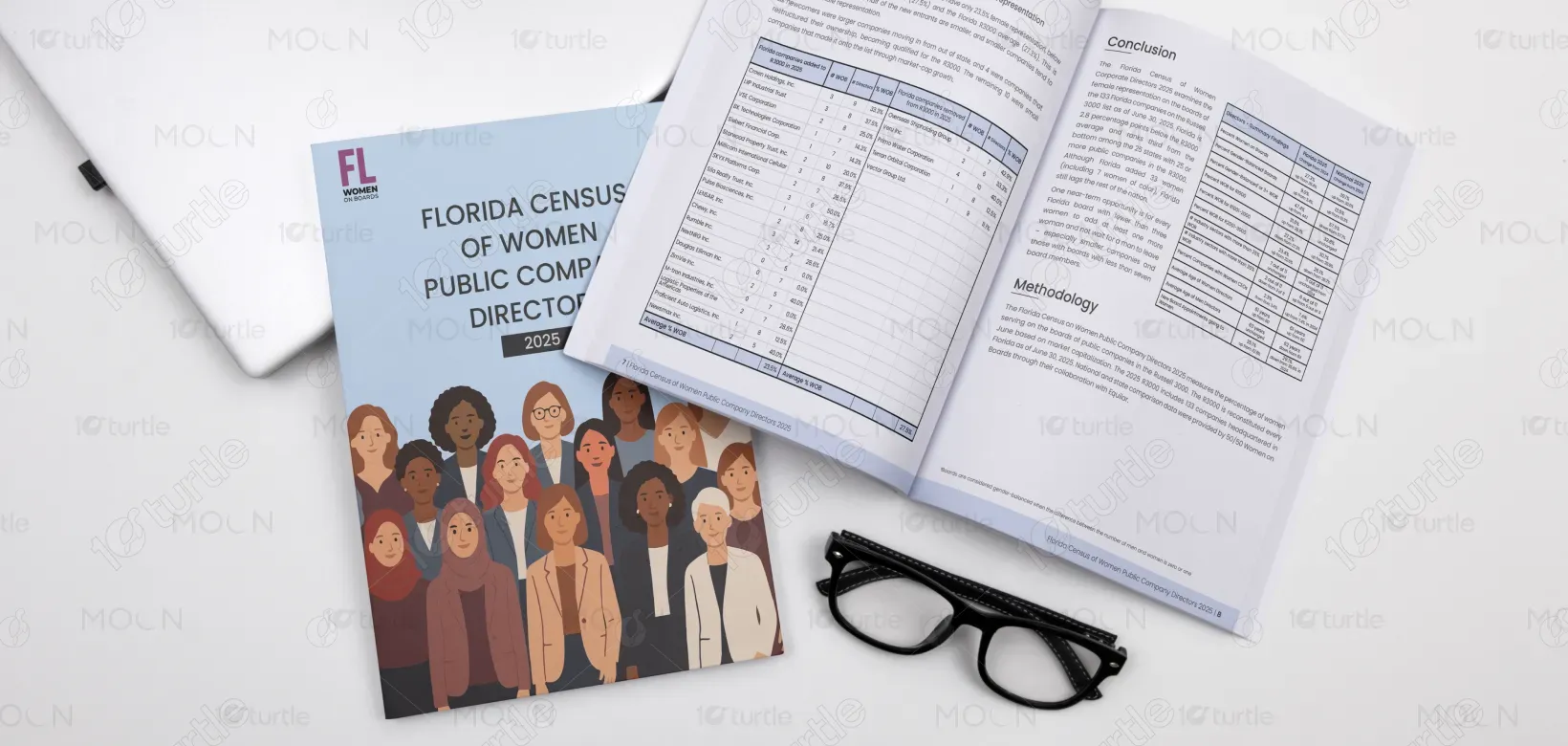
The report addresses these challenges by presenting data-backed insights and clear visual storytelling that highlight areas for improvement. Infographics and trend analyses reveal actionable opportunities—such as adding women to smaller boards and introducing tenure or age caps to encourage renewal. The publication also amplifies success stories of gender-balanced companies, promoting visibility and accountability. This evidence-based design approach helps organizations recognize, compare, and close their diversity gaps effectively.

Our vision For the Brand
How we build Fl Women’s Report Design?
The long-term vision of the Florida Census is to accelerate progress toward gender-balanced corporate boards statewide. By continuing to track metrics, publish transparent findings, and inspire leadership reform, the initiative aims to position Florida as a benchmark for equitable governance. The report seeks to influence policy, shape inclusive corporate cultures, and ensure that women’s representation becomes a defining strength of Florida’s business ecosystem.
Visual Presentation


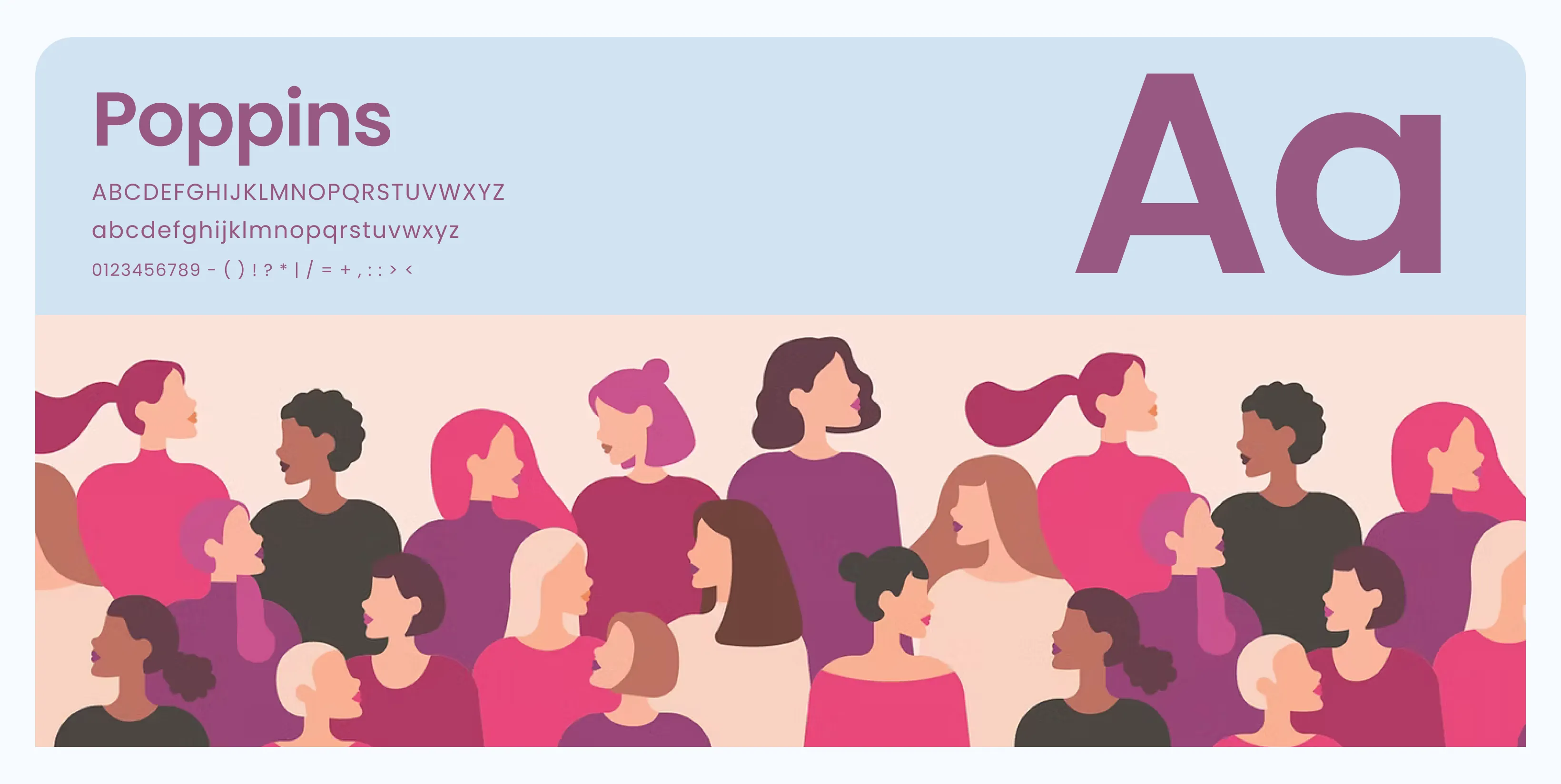
Typography
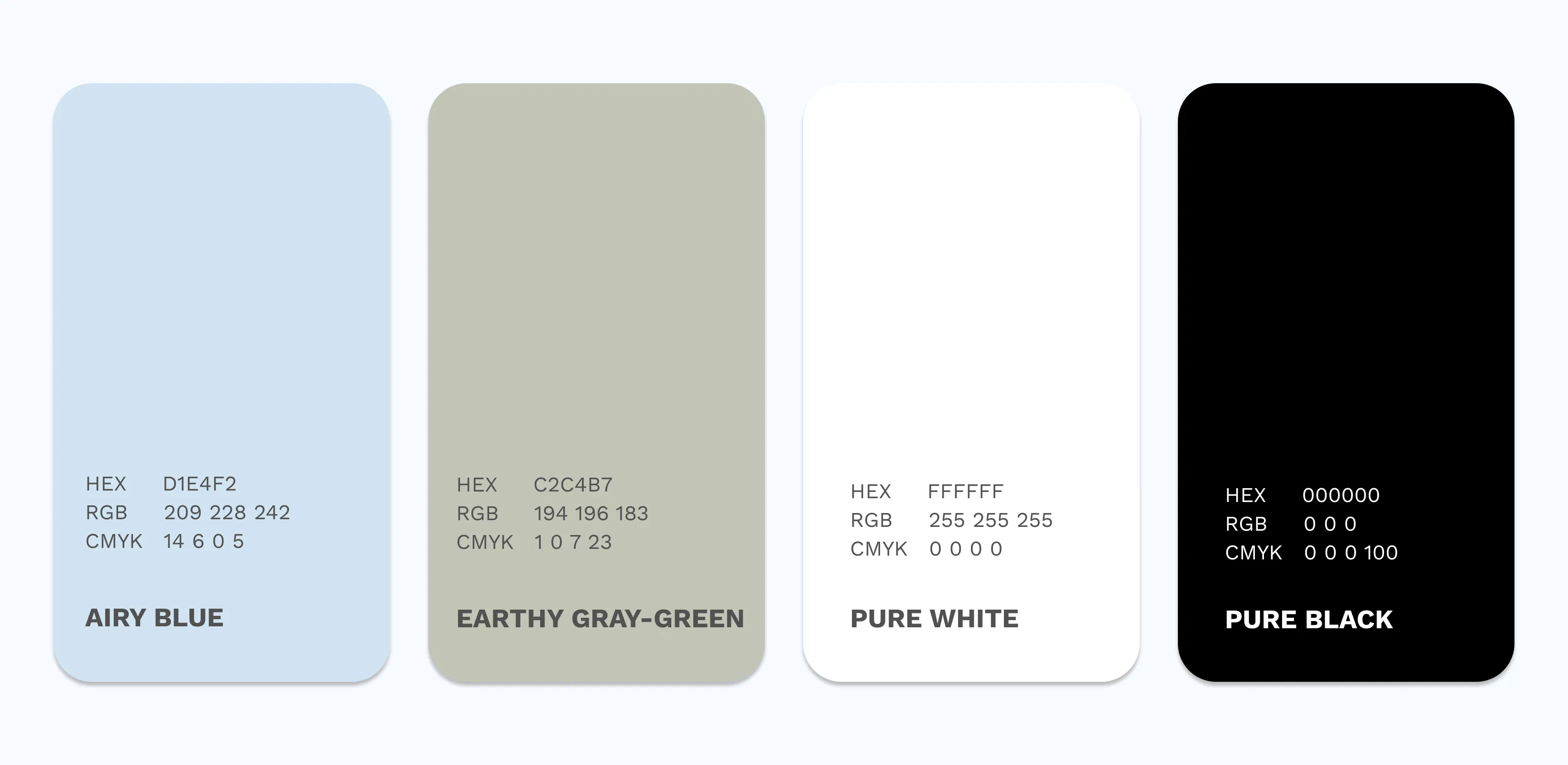
Color Palette
A grayscale palette was intentionally chosen to emphasize neutrality, professionalism, and focus on data integrity. Shades of black, white, and gray create a timeless and authoritative aesthetic, symbolizing balance and equality. The absence of bright colors directs attention to the content—statistics, charts, and narratives—ensuring that the message of gender equity remains central. The palette reinforces the report’s credibility, seriousness, and alignment with corporate governance themes.
Let’s connect