Home / Blog / Best AI Automation Tools Right Now (2025 Buyer’s Guide)
Best AI Automation Tools Right Now (2025 Buyer’s Guide)
The best AI automation tools in 2025 help businesses automate workflows, reduce manual work, and scale operations faster. This buyer’s guide explains top AI automation tools, their use cases, strengths, limitations, and how to choose the right tool based on business needs.
9 Feb, 2026

Introduction: Why AI Automation Tools Matter in 2025
Automation has changed.
In the past, automation followed fixed rules.
Today, automation can think, learn, and adapt.
That is why AI automation tools are becoming essential.
In 2025, businesses use AI automation to:
- Reduce repetitive work
- Improve accuracy
- Speed up operations
- Scale without adding headcount
But not all AI automation tools are the same.
This guide breaks down the best AI automation tools right now, what they do well, where they fall short, and how to choose the right one.

What Are AI Automation Tools?
AI automation tools use artificial intelligence to automate tasks that normally require human judgment.
They go beyond basic rule-based automation.
AI automation tools can:
- Understand language
- Learn from data
- Adapt to changes
- Make predictions
They are used across departments, not just IT.
Key Benefits of AI Automation Tools
Before comparing tools, it helps to understand their value.
AI automation tools help businesses:
- Save time on manual tasks
- Reduce human error
- Improve customer experience
- Make faster decisions
- Scale processes easily
In 2025, these benefits are no longer optional.
They are competitive advantages.
Categories of AI Automation Tools
Not all tools solve the same problem.
AI automation tools usually fall into these categories:
- Workflow automation
- Customer support automation
- Marketing automation
- Document and data processing
- Operations and IT automation
Understanding categories helps you choose wisely.
Best AI Automation Tools Right Now (2025)
Below are the top AI automation tools, grouped by use case.
1. Zapier (AI-Enhanced Workflow Automation)
Best for: No-code workflow automation
Zapier connects apps and automates workflows using AI-assisted logic.
Strengths
- Easy to use
- Huge app ecosystem
- AI-assisted automation suggestions
Limitations
- Limited advanced logic
- Can get expensive at scale
Ideal for:
Small to mid-size businesses automating everyday workflows.
2. UiPath (Enterprise Intelligent Automation)
Best for: Large-scale business automation
UiPath combines RPA with AI and machine learning.
Strengths
- Enterprise-grade automation
- AI document processing
- Scalable and secure
Limitations
- Steep learning curve
- Higher cost
Ideal for:
Enterprises with complex processes.
3. Automation Anywhere
Best for: Intelligent process automation
This platform blends RPA, AI, and analytics.
Strengths
- Cloud-native
- AI-driven insights
- Strong governance
Limitations
- Requires technical expertise
Ideal for:
Organizations automating finance, HR, and operations.
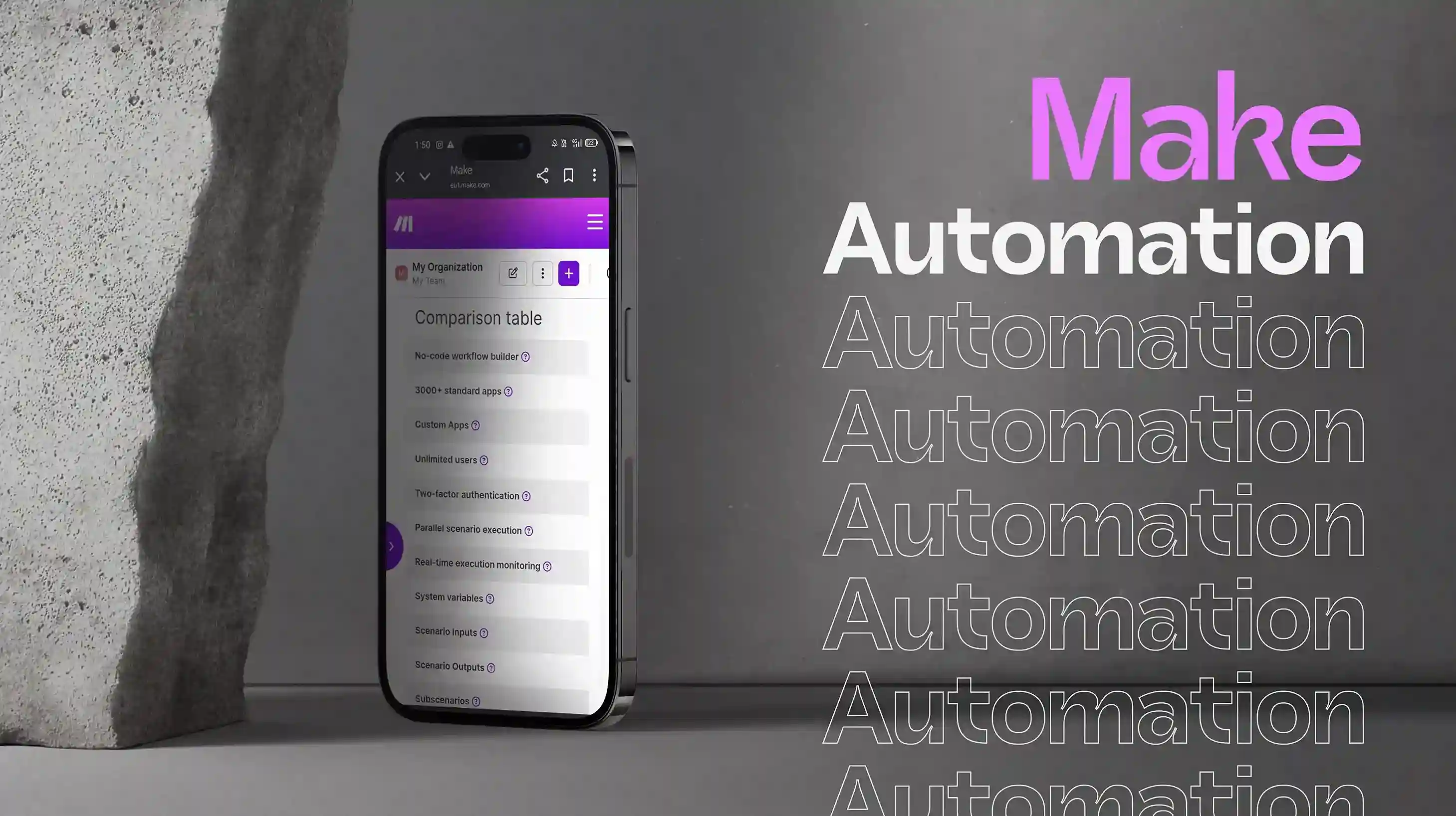
4. Make (Formerly Integromat)
Best for: Visual automation workflows
Make offers powerful workflow automation with AI integrations.
Strengths
- Visual builder
- Advanced logic
- Flexible integrations
Limitations
- Learning curve for beginners
Ideal for:
Power users and automation-focused teams.
5. HubSot AI Automation
Best for: Marketing and sales automation
HubSpot uses AI to automate marketing, CRM, and customer journeys.
Strengths
- Unified platform
- AI content and workflow automation
- Strong analytics
Limitations
- Cost increases with scale
Ideal for:
Marketing-driven businesses.
6. Peltarion / Low-Code AI Platforms
Best for: Custom AI automation
Low-code AI platforms allow businesses to build tailored automation.
Strengths
- Custom AI workflows
- Flexible use cases
Limitations
- Requires planning and data
Ideal for:
Businesses needing custom AI automation solutions.
_11_11zon.webp)
How to Choose the Right AI Automation Tool
Choosing the best AI automation tool depends on your needs.
Ask these questions:
- What processes need automation?
- How complex are the workflows?
- Do we need AI learning or simple automation?
- What is our budget?
- Do we need scalability?
There is no one-size-fits-all tool.
AI Automation Tools for Different Business Sizes
Small Businesses
- Zapier
- Make
- AI-enabled CRM tools
Mid-Size Businesses
- HubSpot
- Automation Anywhere
- Hybrid automation stacks
Enterprises
- UiPath
- Custom AI platforms
- End-to-end intelligent automation
Pricing Factors for AI Automation Tools
AI automation tools vary in cost.
Pricing depends on:
- Number of workflows
- AI features
- User seats
- Data volume
- Enterprise support
Always evaluate ROI, not just subscription price.
Common Mistakes When Buying AI Automation Tools
Avoid these mistakes:
- Choosing tools based on hype
- Ignoring scalability
- Underestimating setup effort
- Not involving business teams
- Expecting instant results
AI automation is a strategy, not a plug-and-play fix.
AI Automation vs Traditional Automation Tools
Traditional automation:
- Rule-based
- Limited flexibility
AI automation:
- Learns from data
- Adapts over time
In 2025, businesses are moving toward hybrid automation, combining both.
How AI Automation Tools Deliver ROI
AI automation delivers value by:
- Reducing manual work
- Improving accuracy
- Speeding up operations
- Enhancing customer experience
Over time, ROI compounds.
When to Invest in AI Automation Tools
You should consider AI automation if:
- Manual work is slowing growth
- Errors are costly
- Processes are complex
- Scaling is difficult
If these sound familiar, AI automation is worth exploring.
Final Thoughts: Best AI Automation Tools in 2025
The best AI automation tools in 2025 are not just powerful.
They are practical, scalable, and business-focused.
The right tool depends on:
- Your processes
- Your goals
- Your growth stage
Choose wisely. Automate strategically.
FAQs:
Q-1. What are AI automation tools?
A-1. AI automation tools use artificial intelligence to automate tasks that require decision-making, learning, or data analysis.
Q-2. Are AI automation tools expensive?
A-2. Costs vary widely. Some tools are affordable for small businesses, while enterprise tools require larger investments.
Q-3. Can AI automation replace employees?
A-3. No. AI automation supports teams by handling repetitive tasks, not replacing human judgment.
Q-4. Which AI automation tool is best for beginners?
A-4. No-code tools like Zapier or Make are ideal for beginners.
Q-5. Do AI automation tools need data to work?
A-5. Yes. AI tools perform better when they have quality data to learn from.
Q-6. How long does it take to see results?
A-6. Simple automations show results quickly. Complex AI systems take time to optimize.
Q-7. Are AI automation tools secure?
A-7. Reputable tools follow strict security standards, but configuration and governance matter.