Home / Blog / Catalog Design Services: What Makes a Product Catalog Convert
Catalog Design Services: What Makes a Product Catalog Convert
Discover how effective catalog design services can transform your product catalog into an engaging and visually appealing marketing tool. Learn what makes a product catalog stand out, attract customers, showcase products, and drive more sales through creative layouts and professional design.
13 Oct, 2026
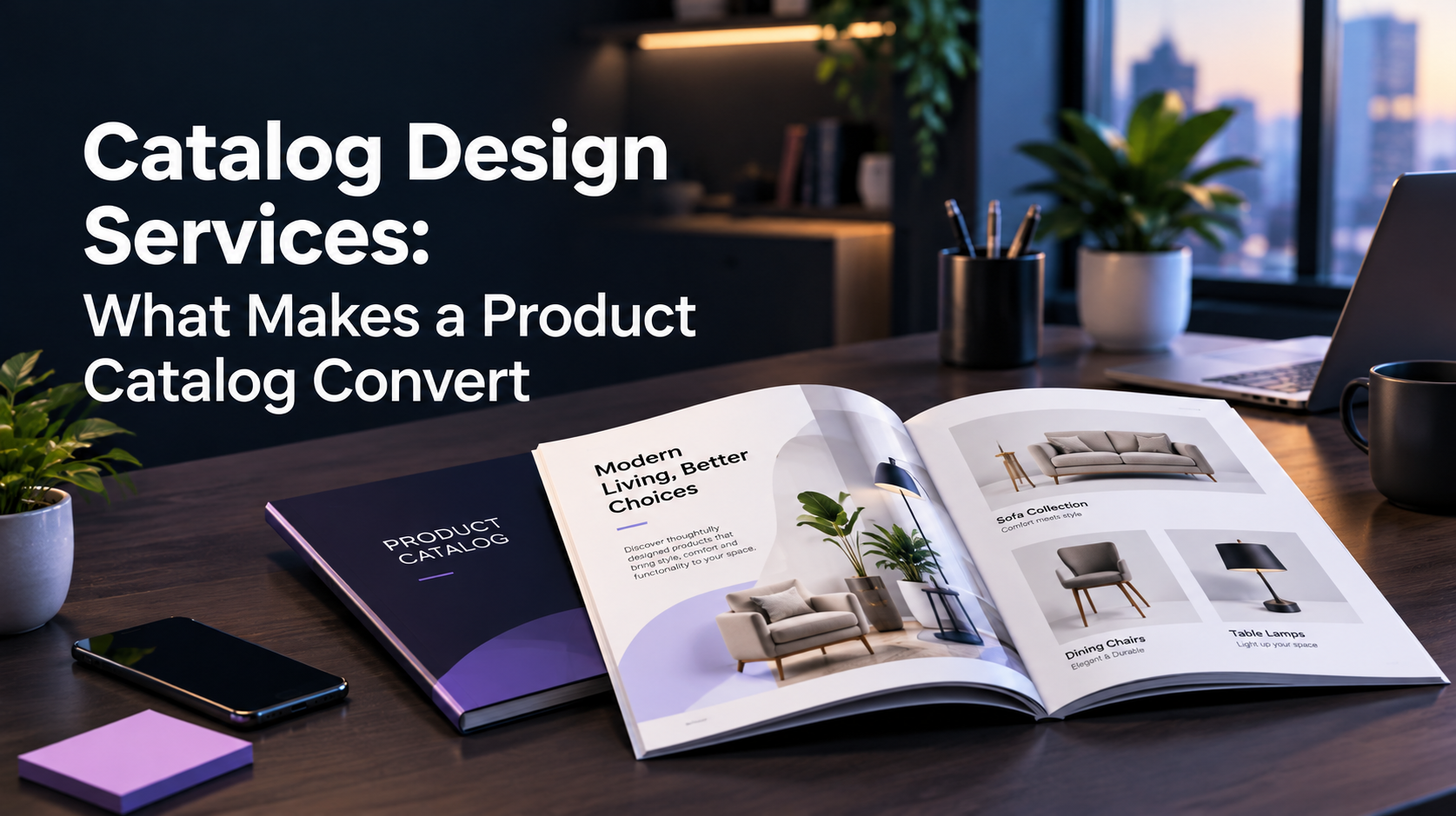
A product catalog does more than list what you sell. It guides a buyer from curiosity to a decision, whether it lands in someone's inbox as a PDF or on their desk as a printed piece. Catalog design services exist to make that path clear. This guide covers what the work actually involves, who tends to need it, and what to check before choosing a provider.
What catalog design services actually include
Catalog design is not just arranging product photos on a page. A properly built catalog covers several layers working together:
- Layout and hierarchy: Where the eye lands first, how categories are grouped, and how a buyer moves from one section to the next.
- Product information architecture: Deciding what details belong on the page (specs, pricing, SKUs, variants) and what belongs in a linked resource instead.
- Visual consistency: Typography, color, spacing, and imagery that match the brand across every page, not just the cover.
- Photography and image preparation: Product shots need consistent lighting, cropping, and color accuracy so items look accurate rather than staged.
- Print and digital formatting: A catalog built for print (bleed, resolution, binding) needs different preparation than one built for a website, an email attachment, or a flipbook viewer.
A catalog that skips any of these layers usually still looks acceptable. It just does not perform as well, because buyers give up on pages that are hard to scan.
Who actually needs professional catalog design services?
Not every product list needs a full design engagement. Catalog design services tend to matter most for businesses in a few specific situations:
- Manufacturers, wholesalers, and distributors with large product ranges that change often
- Retailers preparing a seasonal print catalog or lookbook
- B2B companies whose sales teams hand catalogs to prospects during a pitch
- Ecommerce brands producing a downloadable PDF version of their product line
- Franchises or multi-location businesses that need one consistent catalog format across teams
A small business with a handful of products may only need a simple product sheet. A business with dozens or hundreds of SKUs, multiple categories, or a sales team that relies on the catalog as a selling tool usually benefits from a dedicated design pass.

Questions to ask before hiring a catalog design provider
A short list of questions during the discovery call can save weeks of back-and-forth later:
- Will the catalog be designed for print, digital, or both, and does that change the process?
- How is product data (names, specs, and pricing) collected and organized before design starts?
- Who handles photography, and what happens if existing product photos are inconsistent?
- How many revision rounds are included before the project is considered complete?
- Can the catalog template be updated internally later, or does every update require the design team?
- How is brand consistency maintained if the catalog is one part of a larger branding project?
That last question matters more than it looks. A catalog designed without reference to the existing brand guide tends to drift visually from the rest of a company's marketing over time.
What working with a catalog design team looks like
At 10turtle, catalog design sits inside the graphic, print, and packaging design specialty within the Branding & Creative pillar, handled by a dedicated creative team rather than treated as a side task for a generalist designer. The process typically starts with organizing product data and understanding how the catalog will actually be used, whether that is a sales team leave-behind, a print mailer, or a downloadable resource on a product page.
From there, the design work considers the same factors that affect any conversion-focused piece: how easily a reader can scan the page, whether the information hierarchy matches how people actually shop, and whether the visual system holds up whether someone is holding a printed copy or scrolling on a phone. Businesses that are rebuilding an existing catalog rather than starting from zero often pair the project with a free audit, which can flag inconsistencies in the current product photography, layout, or brand application before design work begins.
Frequently asked questions
What is included in catalog design services?
Catalog design services typically include layout and page design, product information organization, photography preparation or coordination, and formatting for print, digital, or both. Some providers also handle copywriting for product descriptions, though this varies. The scope should be confirmed during discovery based on the number of products and pages involved.
How long does a catalog design project usually take?
Timelines depend on the number of products, whether new photography is needed, and how many revision rounds are included. A small catalog with ready content can move faster than a large catalog requiring new photography and multiple stakeholder approvals. on typical turnaround ranges before publishing.
Do catalog design services include photography?
Some providers include product photography, others only prepare and correct existing images, and some offer both as separate options. It is worth confirming this upfront, since inconsistent product photography is one of the most common reasons a catalog looks unfinished even after the layout is done.
Can one catalog work for both print and digital use?
Yes, but it requires planning early rather than adapting a finished print file afterward. Print catalogs need attention to resolution, bleed, and binding, while digital versions need to work well on screens of different sizes. Deciding on both formats before design begins usually produces a better result than converting one format into the other later.