
Home / Blog / Chatbot vs Live Chat: What's Better for Customer Support?
Chatbot vs Live Chat: What's Better for Customer Support?
Compare chatbots vs live chat for customer support, including benefits, costs, response times, use cases, and how to choose the right solution for your business.
21 Oct, 2026
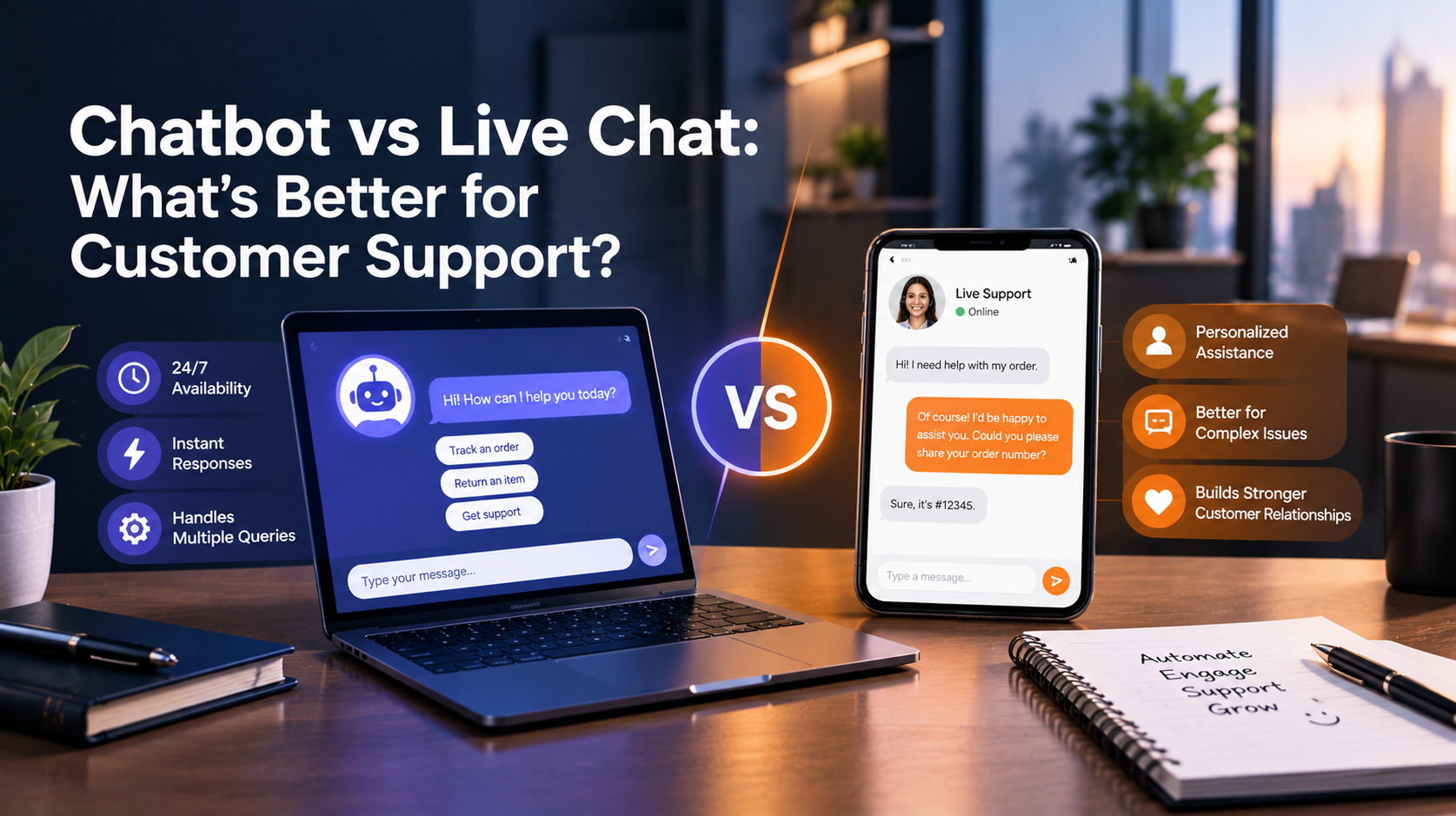
Most support teams eventually face the same decision: add a chatbot, keep live chat staffed by people, or run both together. The right answer depends on ticket volume, complexity, budget, and how much of the conversation actually needs a human. This article compares how chatbots and live chat work, where each one performs well, and what to check before choosing one for your business.
How Chatbots Work in Customer Support
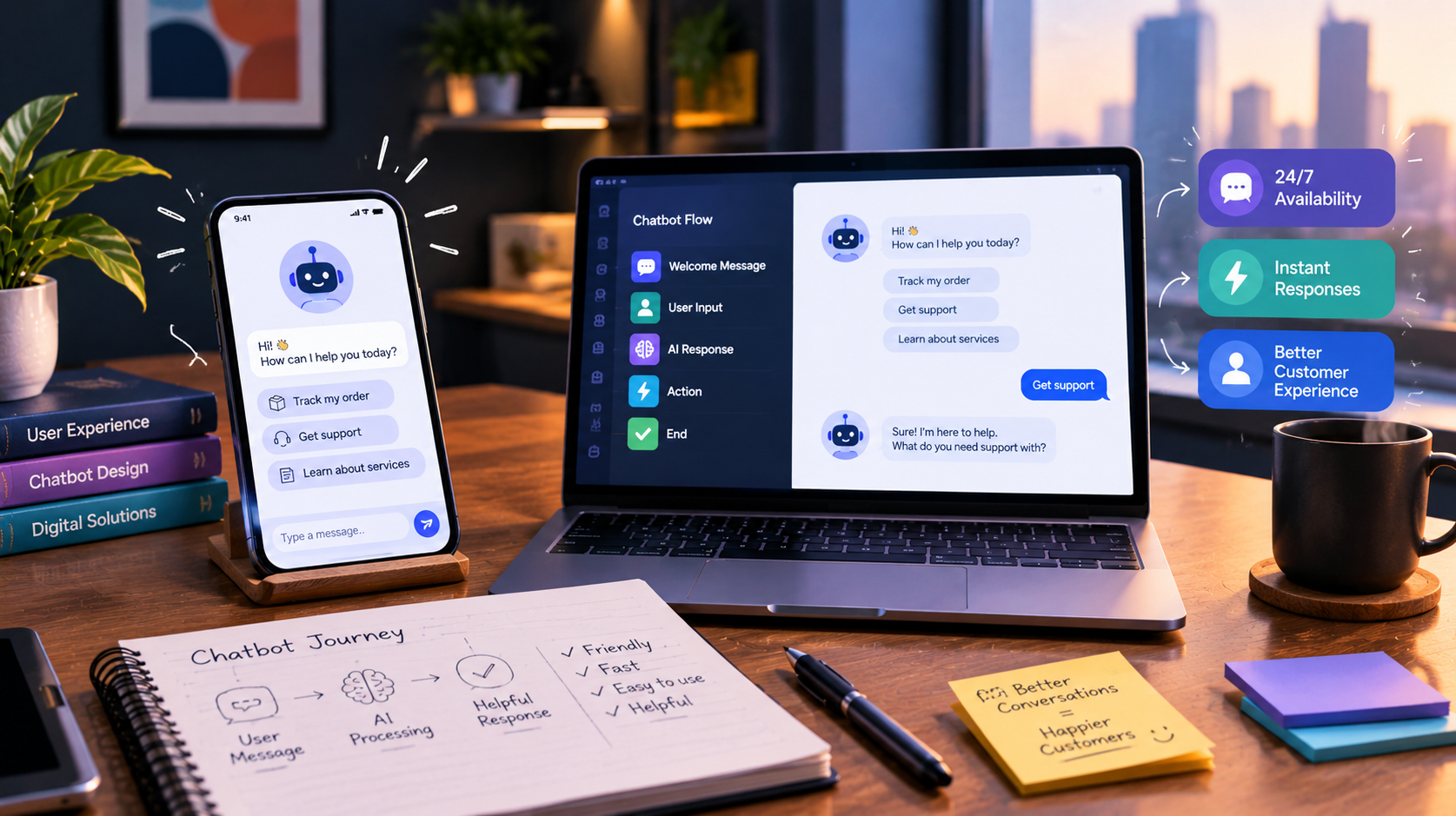
A support chatbot can use scripted workflows, decision trees, or AI to respond to customer questions without requiring a support agent to type every reply. Basic bots work with predefined rules, connecting common questions with prepared responses, while more advanced solutions can understand user intent through natural language processing. With the right chatbot development approach, businesses can also connect these systems to knowledge bases, order details, or account information to provide more relevant and useful answers.
Unlike a support team that may need to handle one conversation at a time, chatbots can operate continuously and manage multiple customer interactions simultaneously. They are often used for tasks such as checking order status, answering account-related questions, scheduling appointments, and handling repetitive requests before a conversation is passed to a human agent. This allows support teams to spend more time on complex issues while customers can get quick answers to routine questions.
How Live Chat Works in Customer Support
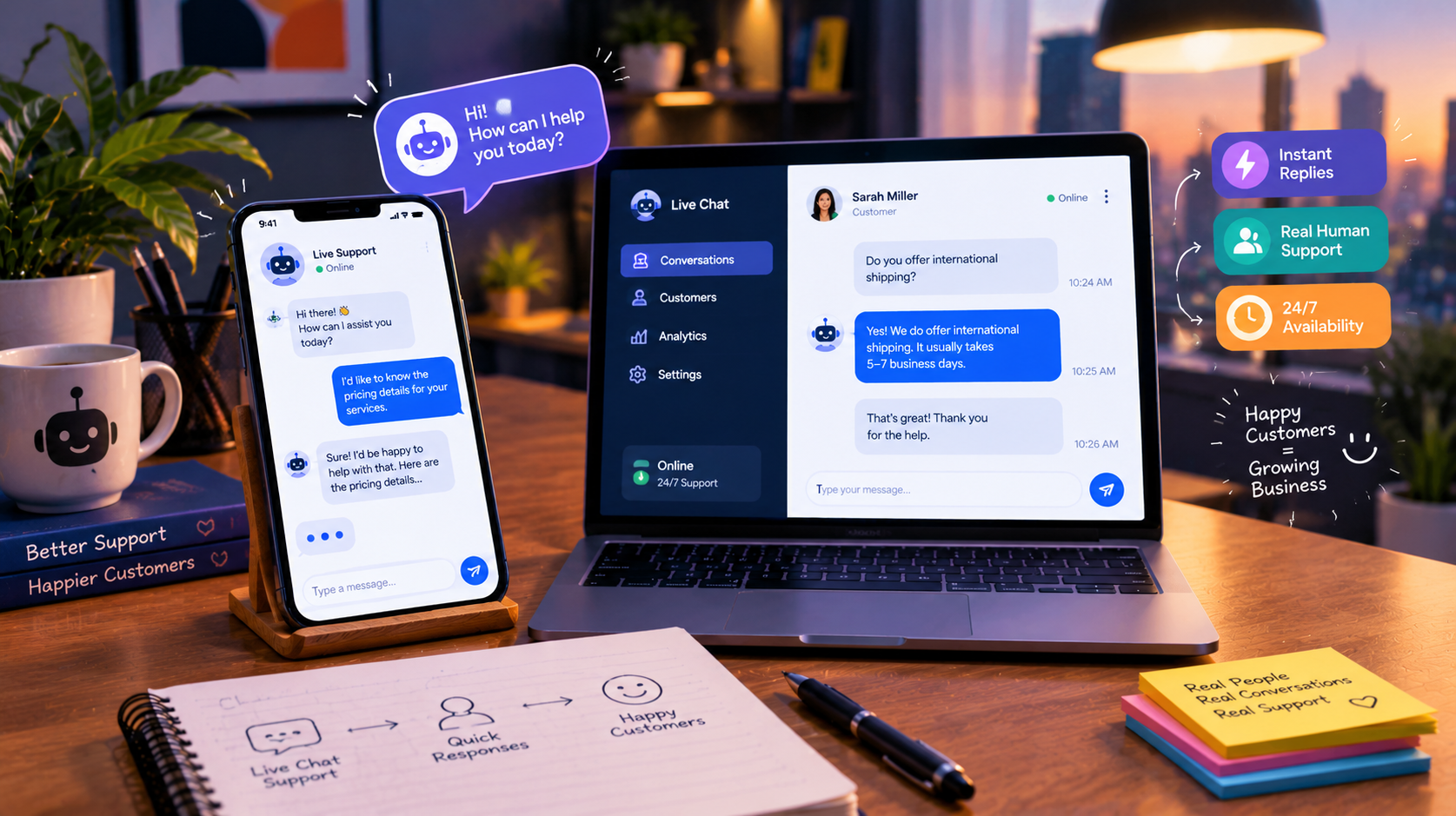
Live chat connects a customer directly to a support agent through a chat window on a website or app. The agent reads the message, checks account or order details if needed, and replies in real time. Live chat depends on staffing, so response speed is tied to how many agents are available and how many conversations each one is handling.
Live chat is typically used for account-specific issues, complaints, technical troubleshooting, and situations where the customer needs judgment rather than a scripted answer.
Chatbot vs Live Chat: Key Differences
When a Chatbot Fits Better
A chatbot tends to make sense when a large share of incoming questions are repetitive: order tracking, business hours, return policies, or basic troubleshooting steps. If support volume is high and mostly predictable, a chatbot can absorb that first layer of questions and free agents for issues that need a person. Chatbots also help outside business hours, when no live agent is available but customers still expect a response.
The trade-off is that a poorly configured chatbot can frustrate customers who need something it was not built to handle. This is usually a workflow and setup problem rather than a limitation of the technology itself, which is why the underlying process matters as much as the tool.
When Live Chat Fits Better
Live chat fits better when conversations involve account-specific details, emotional situations, or decisions that depend on context the bot cannot reliably interpret. Complaints, billing disputes, and technical issues with several moving parts usually resolve faster with a person who can ask follow-up questions and adjust the response on the spot.
For businesses where trust and relationship matter more than speed, such as higher-value purchases or long-term service contracts, live chat often performs better even if it costs more to staff.
Questions to Ask Before Choosing
- What percentage of current support tickets are repetitive versus complex?
- What does average response time look like today, and where are the delays?
- Is the goal to reduce ticket volume, reduce cost, or improve resolution time?
- Does the current support software allow chatbot and live chat to work together, with clear handoff rules?
- Who reviews chatbot conversations to catch gaps or incorrect answers?
Many businesses do not need to pick one over the other. A common setup uses a chatbot for initial triage and routine questions, with a clear handoff to a live agent when the conversation goes beyond what the bot can resolve.
Frequently asked questions
Can a chatbot fully replace live chat support?
Not for every business. A chatbot can handle repetitive, high-volume questions well, but complex, sensitive, or high-value conversations usually still need a person. Most support setups combine both, using the chatbot for triage and live chat for anything that requires judgment or account-specific handling.
Does adding a chatbot reduce customer support costs?
It can reduce costs for repetitive questions by absorbing volume that would otherwise require additional staffing. The actual savings depend on ticket mix, implementation quality, and how well the bot is maintained. It is not a guaranteed reduction for every business.
How do I know if my business needs live chat, a chatbot, or both?
Review your current ticket volume and categorize questions as repetitive or complex. If most tickets are repetitive, a chatbot can help. If complex issues dominate, live chat with trained agents matters more. Most growing businesses eventually combine both with clear escalation rules.



_1_11zon-1758181054011.webp)