Home / Blog / Headless Shopify: Is It Worth It for Growing Ecommerce Brands?
Headless Shopify: Is It Worth It for Growing Ecommerce Brands?
Discover how Headless Shopify works, its benefits, limitations, and impact on SEO, performance, and maintenance costs. Learn when headless commerce makes sense for your growing online store and how 10Turtle’s Shopify development expertise can help you build a flexible, scalable, and high-performing eCommerce experience.
29 Oct, 2026
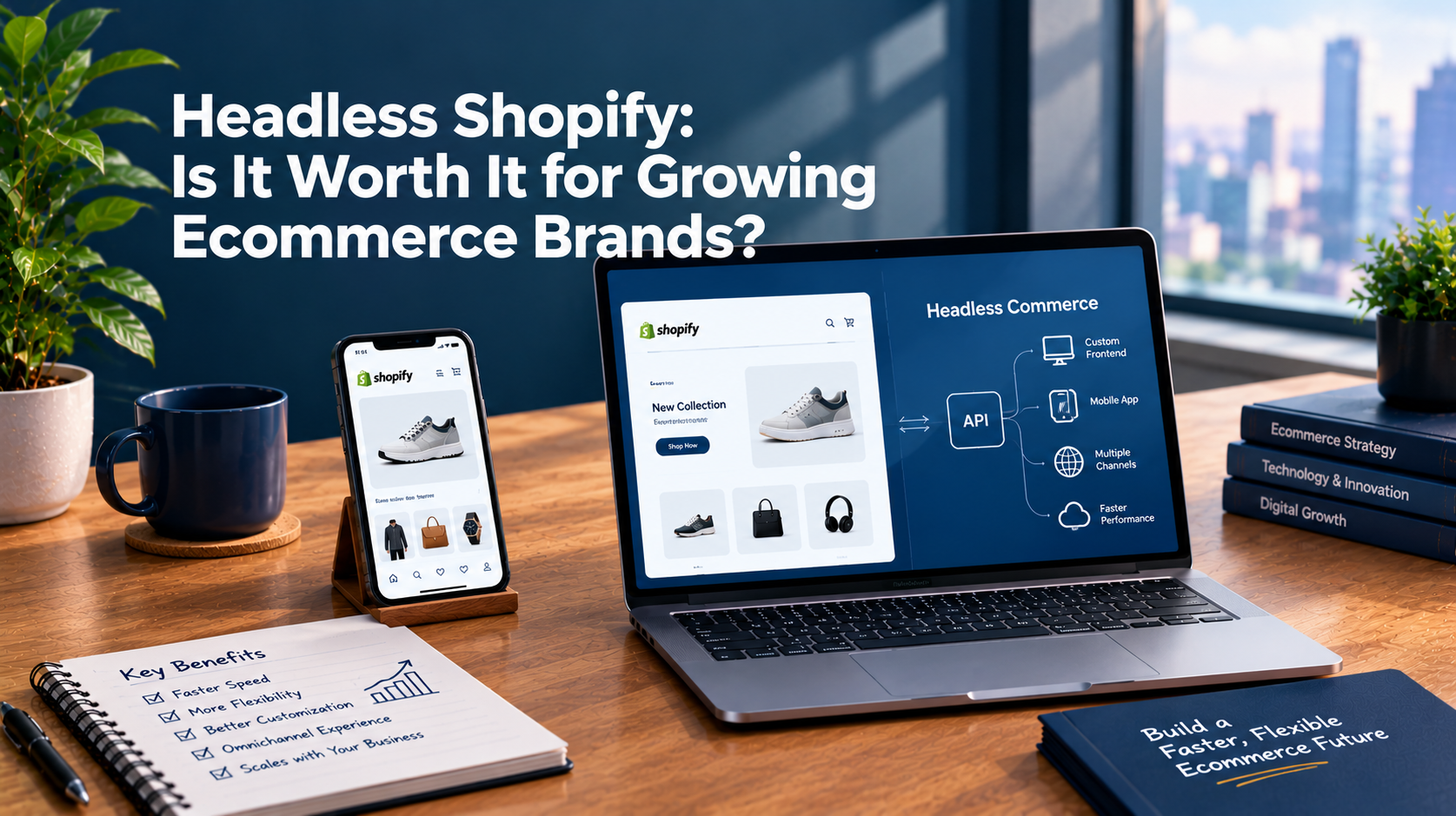
As an online store grows, choosing the right technology becomes increasingly important. Shopify & e-commerce development can help businesses create flexible, scalable shopping experiences, and one approach that often comes up is headless Shopify. While the term may sound technical, the concept is straightforward: it separates the customer-facing storefront from Shopify’s backend, giving businesses more control over design, functionality, and integrations. For some growing brands, this setup can improve flexibility and performance, while for others, it may introduce unnecessary cost and complexity. This article explains how headless Shopify works, where it can add value, and what businesses should consider before making the switch.
What Headless Shopify Actually Means
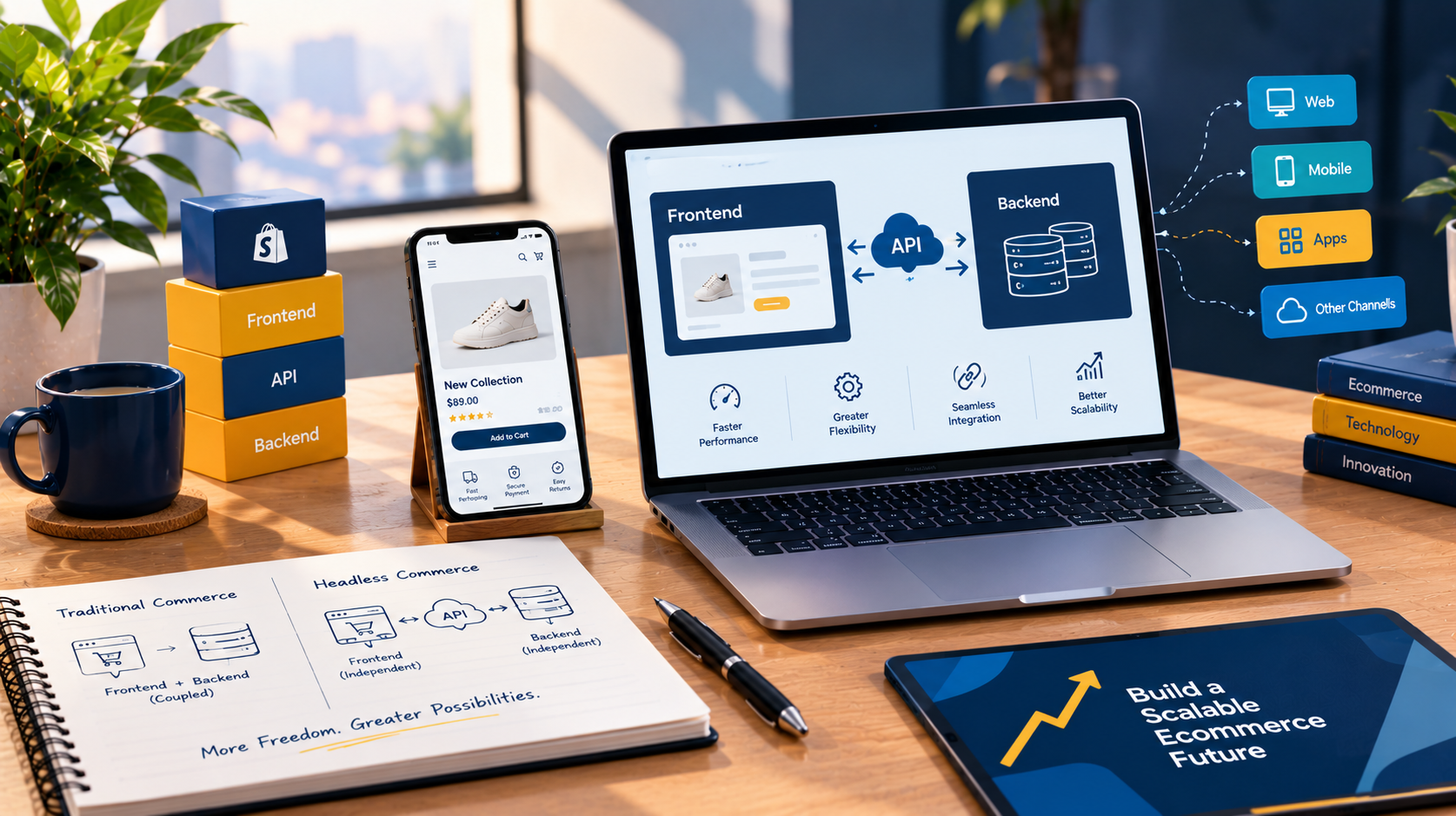
A standard Shopify store uses Shopify's own theme system to control both the storefront design and the backend functionality (checkout, inventory, and orders). Headless Shopify keeps Shopify as the backend but replaces the front-end theme with a custom-built interface, often developed using frameworks like Next.js or Remix, connected through Shopify's Storefront API.
In simple terms, the store's engine stays the same. The dashboard the customer sees changes completely.
How a Headless Shopify Store Works
The front end and back end communicate through APIs instead of a shared theme file. Product data, pricing, and inventory still live in Shopify admin. A separate custom application pulls that data and renders it; however, the development team designs it, independent of Shopify's theme limitations.
This setup gives more control over page speed, layout, and how content is structured for both search engines and AI-driven answer systems. It also means every front-end change requires development work rather than a simple theme editor adjustment.
What Headless Shopify Solves
Headless architecture tends to help brands dealing with specific friction points:
- Slow page load times caused by heavy themes and app scripts that are hard to remove without breaking functionality.
- Design limitations where the brand needs a highly custom storefront experience that standard themes cannot support.
- Multi-channel needs, such as powering a website, an app, and other customer touchpoints from one product catalog.
- Content-heavy experiences where product pages need more editorial flexibility than Shopify's theme structure allows.
What Headless Shopify Does Not Solve
Going headless will not fix a conversion problem caused by weak product photography, unclear pricing, or a confusing checkout flow. It will not automatically improve SEO if the underlying content strategy is weak. And it does not reduce ongoing maintenance. In most cases, it increases it, because a custom front end needs a development team to maintain it instead of a marketing team managing a theme.
Stores with straightforward catalogs and no major performance issues often see little practical benefit from the added complexity.
Common Mistakes When Going Headless
Some brands move to headless before checking whether their actual bottleneck is architecture or something simpler, like unused apps slowing the theme down. Others underestimate the ongoing development resources required once the custom front end is live. A less common but costly mistake is losing structured SEO elements during the rebuild, since headless setups require these to be handled manually rather than through a built-in theme.
When Headless Shopify Makes Sense
Headless tends to fit brands with meaningful traffic, a catalog that has outgrown standard theme flexibility, and an internal or agency team available for ongoing development. It fits less well for smaller catalogs, teams without dedicated development support, or stores where the core problem is conversion rather than performance or design.
Questions to Ask Before Making the Switch
Before committing to a rebuild, it helps to get clear answers on a few things: what specific problem the current theme creates, whether that problem can be solved with theme optimization first, what ongoing development support the headless setup will require, and how product data and SEO structure will be maintained after launch.
A free audit can help separate a genuine architecture problem from a performance issue that a theme cleanup could fix before any rebuild decision gets made.
10Turtle's Shopify & Ecommerce Development team works on both standard and headless Shopify builds, with dedicated web specialists handling the technical side rather than treating it as a generic add-on service. For brands weighing a full platform decision rather than just architecture.
Frequently asked questions
Is headless Shopify faster than a regular Shopify store?
It can be, since a custom front end removes theme bloat and unnecessary app scripts. Speed depends on how the custom build is developed, not just on going headless. A poorly built headless store can still load slowly, so the development approach matters more than the architecture label itself.
Do I need headless Shopify to rank well in search?
No. Search performance depends more on content quality, technical SEO fundamentals, and site structure than on whether a store is headless. A well-optimized standard Shopify theme can outperform a poorly structured headless build.
How much more does a headless Shopify build cost to maintain?
Costs vary by scope, team, and ongoing feature needs, so no fixed figure applies to every project. In general, headless setups require more development involvement than theme-based stores, since front-end changes are not editable through Shopify's standard admin tools.
Can I switch from headless back to a standard Shopify theme later?
Yes, though it requires development work to rebuild the front end within Shopify's theme structure. Product and order data stay intact since they live in Shopify's backend regardless of which front end is connected to it.