
Home / Blog / Logo Design vs. Brand Identity: What's the Difference and Why It Matters
Logo Design vs. Brand Identity: What's the Difference and Why It Matters
Understand the difference between logo design and brand identity, and learn how each contributes to building a strong, consistent brand. Discover how colors, typography, visual elements, and brand messaging work together to create a memorable business identity and build customer trust.
14 Oct, 2026
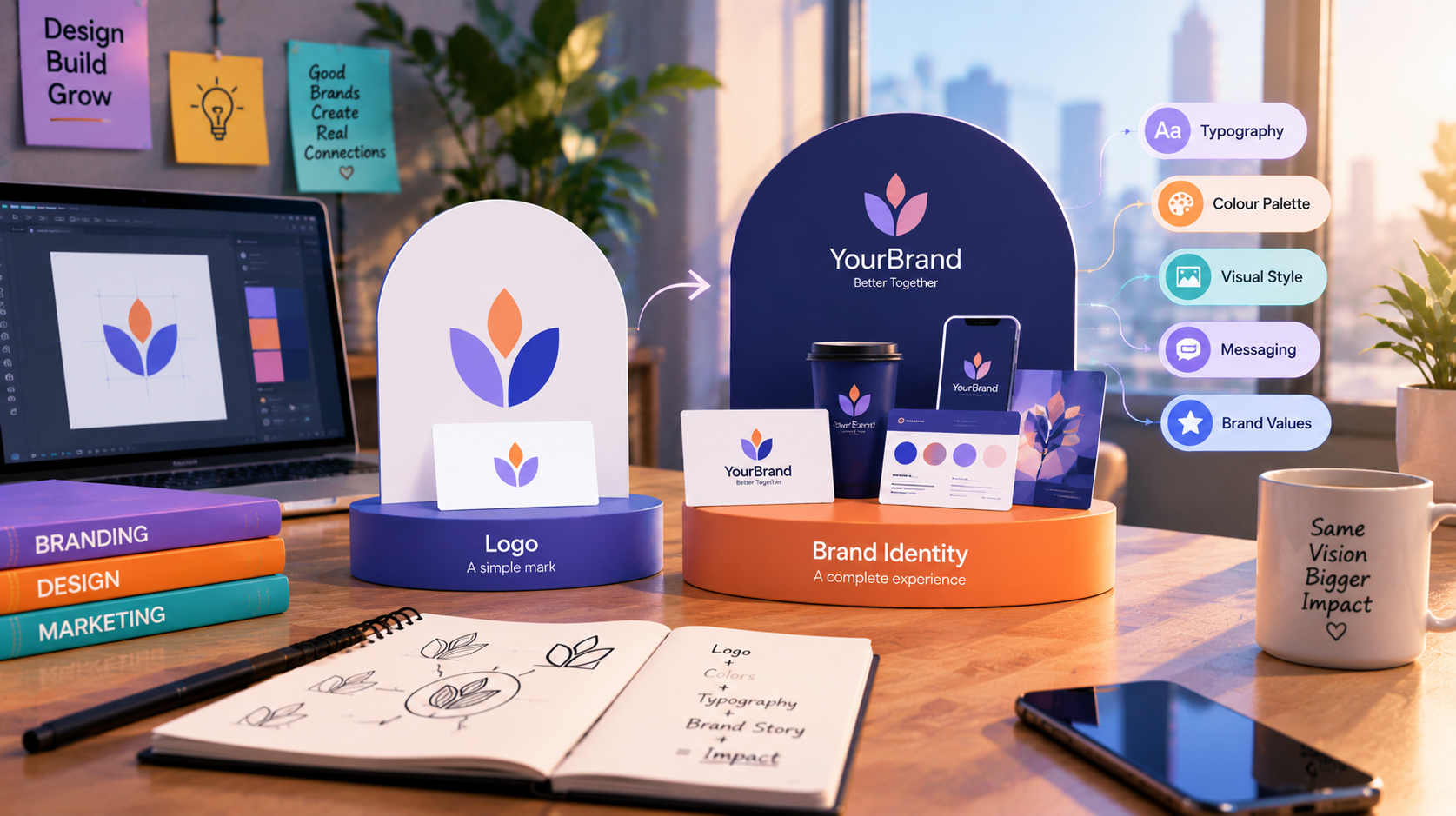
A lot of businesses ask for "a logo" when what they actually need is a full brand identity, and the reverse happens too. Some brands invest heavily in an identity system before they've settled on a mark that works. Knowing where a logo ends and a brand identity begins helps you brief the right project, budget for it correctly, and avoid paying twice.
What a Logo Actually Is
A logo is a single visual mark. It's the icon, wordmark, or combination mark that identifies your business at a glance, on a business card, a favicon, or the side of a delivery van. A good logo is simple enough to work at any size, distinctive enough to be remembered, and flexible enough to sit on a light background one day and a dark one the next.
On its own, a logo tells someone what to look for. It doesn't tell them what your business sounds like, what colors belong to it, or how it should show up in a slide deck versus a product label. That's a separate layer of work.
What a Brand Identity Actually Is
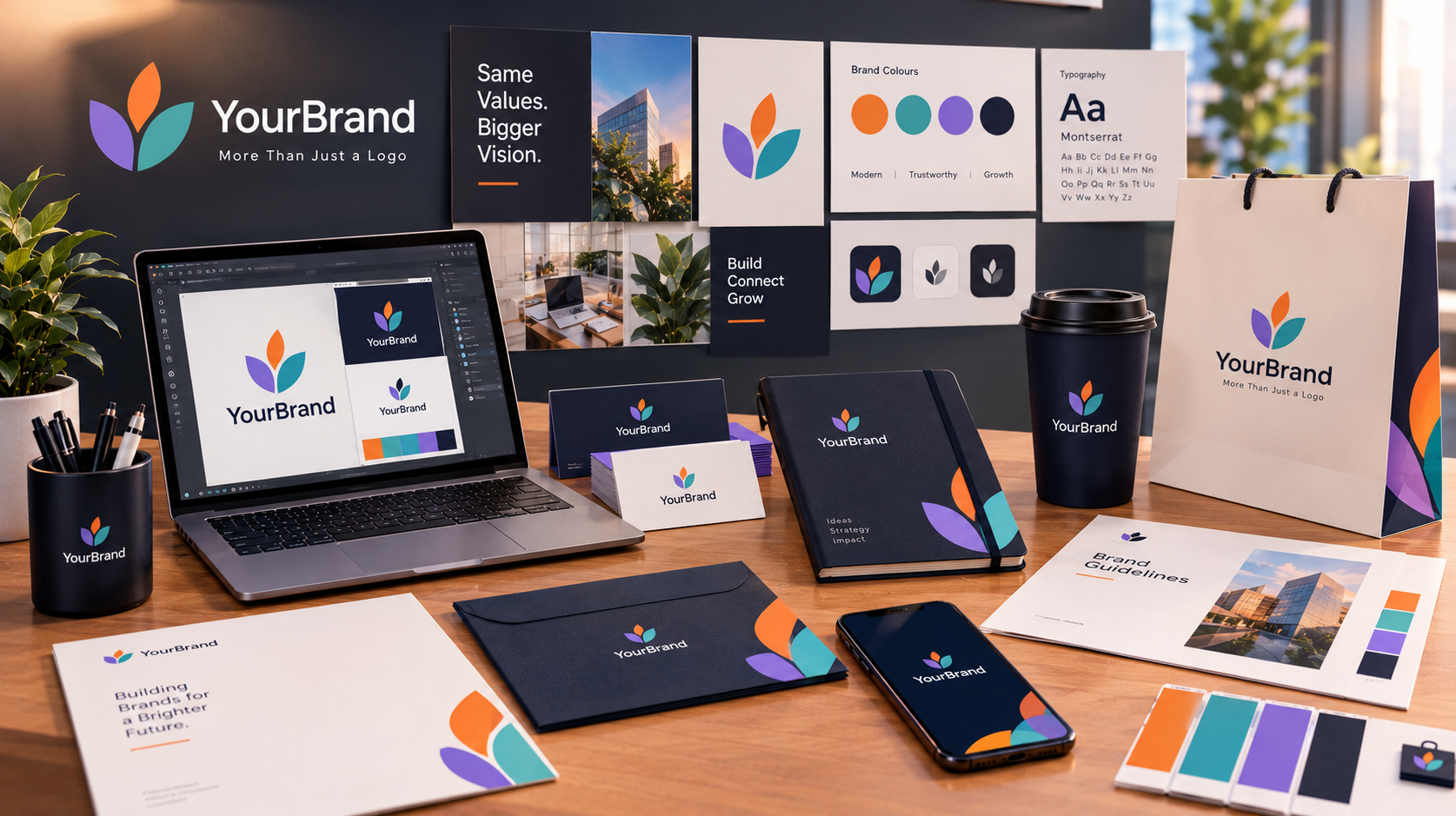
A brand identity is the full visual system your logo lives inside. It typically includes a defined color palette, primary and secondary typography, iconography or graphic elements, photography or illustration style, and rules for how the logo can and can't be used across different surfaces.
Where a logo answers, "What's the mark?" a brand identity answers, "How does this business look and feel everywhere it shows up?" That consistency is what makes a brand recognizable across a website, packaging, social posts, and print materials, even when someone only sees a color or a typeface and not the logo itself.
Key Differences Between the Two
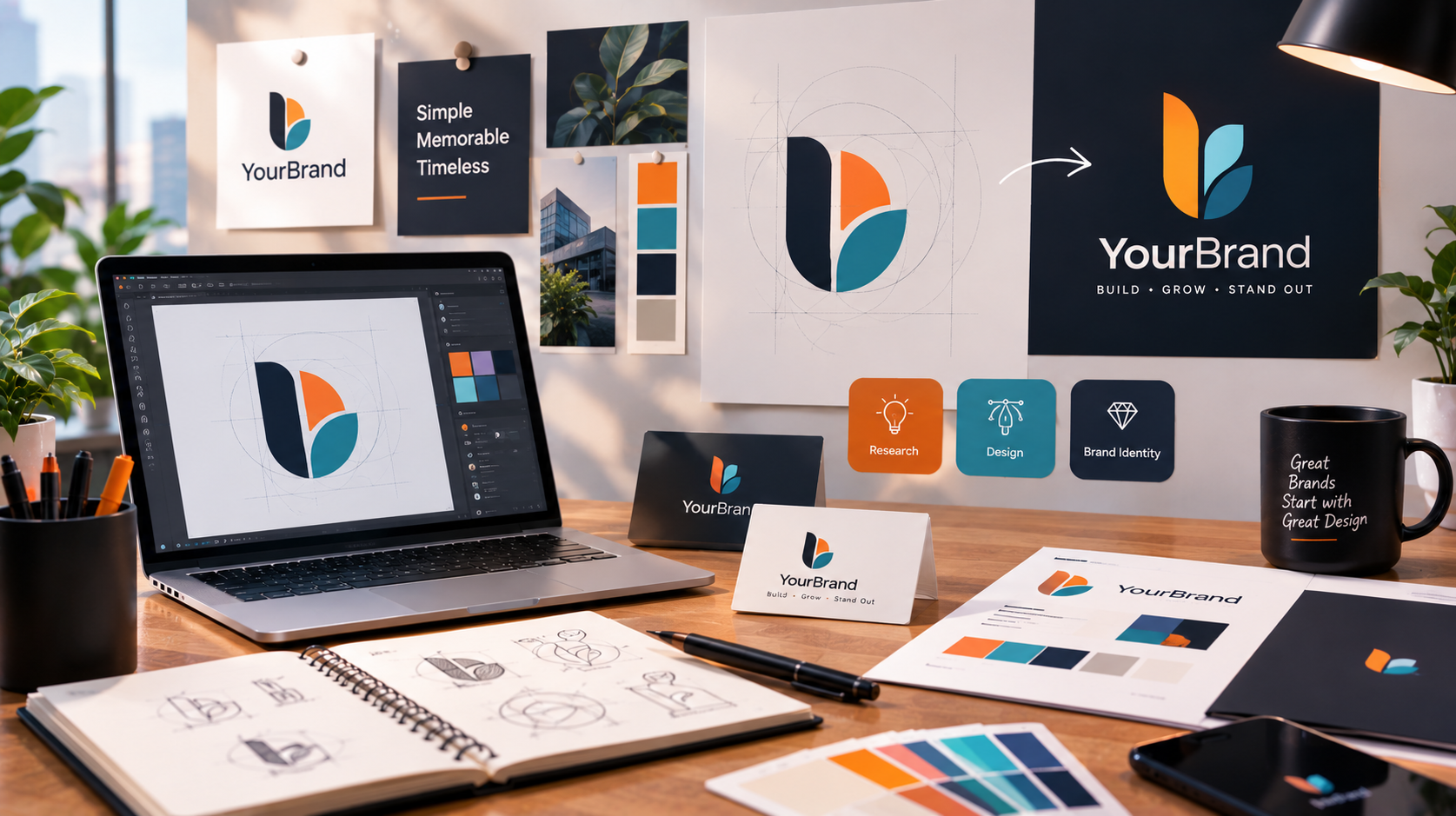
The clearest way to separate them is by scope and output:
- Logo design produces one asset: the mark itself, along with its core file formats and basic usage guidance (minimum size, clear space, acceptable color variations).
- Brand identity produces a system: the logo, color palette, typography, supporting graphic elements, and usage rules that apply across every channel the business uses.
A logo project is narrower and typically faster. A brand identity project takes longer because it has to account for more touchpoints, more edge cases, and more collaboration on how the pieces work together before anything is finalized.
Advantages and Limitations of Each
Logo design on its own works well when a business already has a defined color scheme, tone, and visual direction and simply needs a new or updated mark to represent it. The limitation is that a logo alone won't solve inconsistency elsewhere. If your social graphics, website, and print materials all use different colors and fonts, a new logo won't fix that on its own.
A full brand identity solves the consistency problem directly, since every asset is built from the same defined system. The trade-off is scope: it's a bigger project, with more decisions to make up front, and it takes longer to see the pieces roll out than a single mark would.
When Each Option May Fit
A standalone logo project tends to fit a business that already has some brand direction and needs the mark itself updated or created, or a business testing a new product line under an existing parent brand.
A full brand identity project tends to fit a new business building from zero, a company that has outgrown a logo it designed itself, or a business that's noticed its materials look inconsistent across different platforms and vendors. It also fits a business preparing to expand into new markets or channels, where a documented system makes it easier for different teams and vendors to stay on-brand without re-deciding the basics on every project.
Questions to Ask Before Choosing
Before briefing either project, it helps to get clear answers to a few questions:
- Does the business already have a defined color palette and typography, or is that undefined too?
- Will the new work need to extend into packaging, signage, or print, not just digital?
- Who else, internally or externally, will need to apply the brand consistently once it's delivered?
- Is there an existing style guide, or will usage rules need to be created from scratch?
If the answers point to more than "just the mark," a brand identity project is usually the better starting point, since building the system first avoids redoing the logo work later.
At 10turtle, logo design and full brand identity work sit under a dedicated branding team, separate from the web and AI automation teams, so the visual system is built by people who work in identity design day to day rather than as one task among many. A free audit is a practical way to get a straight answer on which of the two a business actually needs before committing to either scope.
The same consistency that matters for logos and digital brand assets also extends to physical materials. Businesses shipping physical products often face the same branding challenges across packaging and print materials as they do on their websites. A well-designed logo plays an important role in keeping these touchpoints recognizable and consistent, as explained in our guide on Why a Logo Is Important for Your Company.
Frequently Asked Questions
Is a logo part of brand identity or separate from it?
A logo is part of a brand identity, not separate from it. Think of the logo as one component inside a larger system that also includes color, typography, and usage rules. A business can have a logo without a documented brand identity, but a complete brand identity always includes the logo as one of its pieces.
Do small businesses need a full brand identity, or is a logo enough?
It depends on how many places the brand needs to show up. A business with a simple online presence and a few materials may get by with a strong logo and a basic color and font choice. A business selling across multiple channels, with packaging, ads, and print materials, usually benefits from a documented identity so everything stays consistent as more people touch the brand.
How long does a brand identity project usually take compared to a logo project?
A brand identity project generally takes longer than a logo project because it involves more deliverables and more rounds of feedback across different applications. Exact timelines depend on scope, revisions, and how many touchpoints are included, so it's worth confirming a timeline directly with whoever is doing the work.
Can a business update its brand identity without changing its logo?
Yes. It's common to refresh colors, typography, or supporting graphics while keeping an existing logo intact, especially if the logo is already well recognized. This is typically treated as a brand refresh rather than a full rebrand, and it's a lighter project than starting the identity from scratch.

_1_11zon-1762758103181.webp)