
Home / Blog / Types of Website Development Services Explained: From Static Sites to Web Apps
Types of Website Development Services Explained: From Static Sites to Web Apps
This blog explains the difference between no-code and code-based custom chatbots in simple terms.It helps businesses understand how each option works, their pros and limits, and which chatbot approach fits different business goals.
20 Feb, 2026
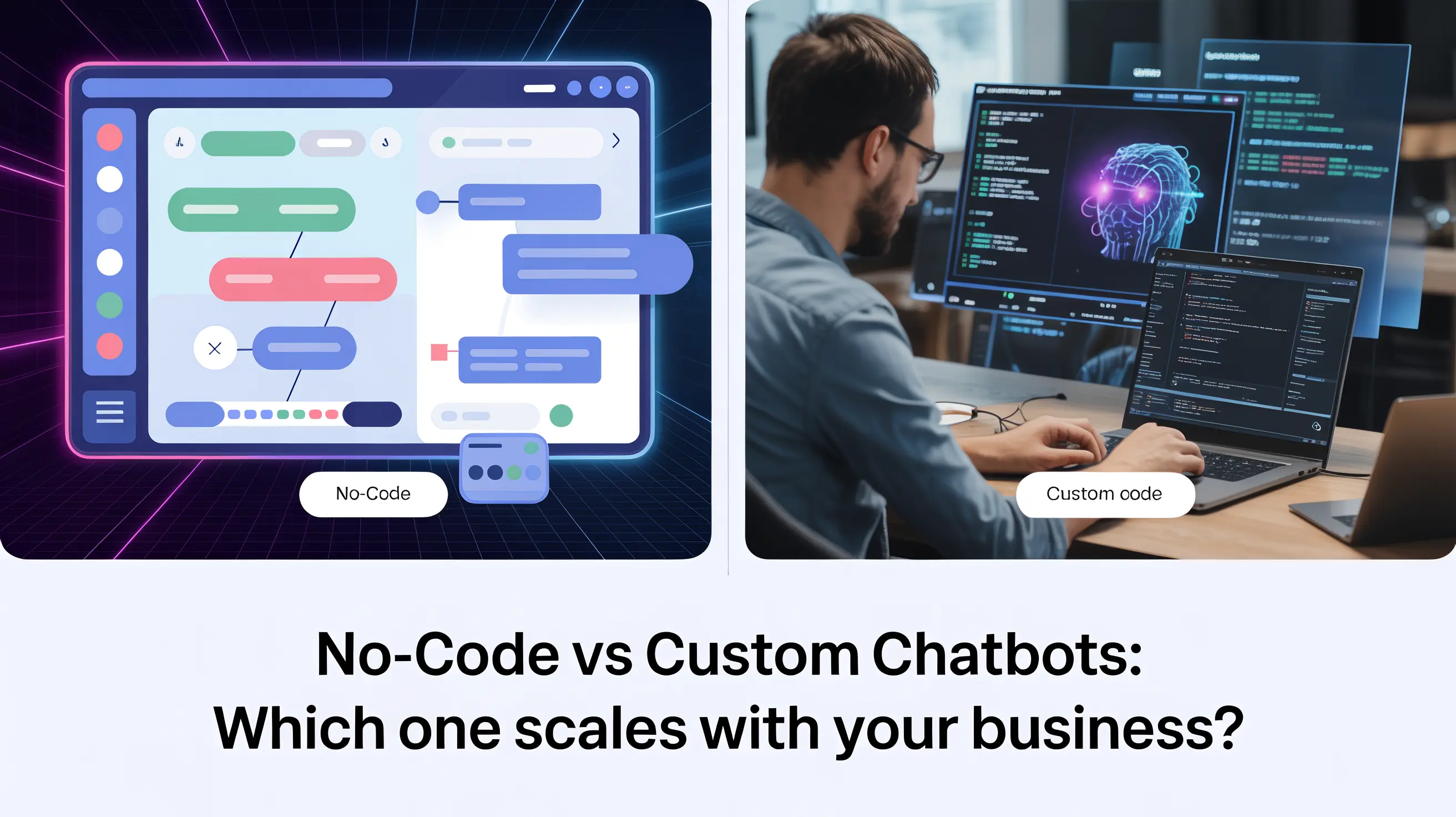
No-Code vs Code-Based Custom Chatbots: Which Should You Choose?
Chatbots are no longer optional tools. Businesses now use them for customer support, lead generation, onboarding, and even sales. But when it comes to building a chatbot, one question creates confusion for many teams:
Should you choose a no-code chatbot or a code-based custom chatbot?
Both options serve different purposes. Choosing the wrong one can limit growth, create poor user experience, or increase costs later. This guide explains both approaches clearly so you can make the right decision for your business.
What Is a No-Code Chatbot?
A no-code chatbot is built using visual builders instead of programming. These platforms allow users to create chatbots by selecting pre-built blocks, flows, and rules.
You do not need coding knowledge to set them up.
How No-Code Chatbots Work
No-code chatbots usually work on:
- Rule-based logic
- Predefined conversation flows
- Drag-and-drop builders
You define:
- User questions
- Bot responses
- Simple conditions
The platform handles the rest.
Common Use Cases for No-Code Chatbots
No-code chatbots are best for:
- Basic customer support
- FAQs and helpdesk automation
- Lead collection forms
- Appointment booking
They work well when conversations are predictable.
Benefits of No-Code Chatbots
- Fast setup
- Low initial cost
- No technical dependency
- Easy to update
Limitations of No-Code Chatbots
- Limited customization
- Weak handling of complex queries
- Restricted integrations
- Vendor dependency
As business needs grow, these limits become noticeable.
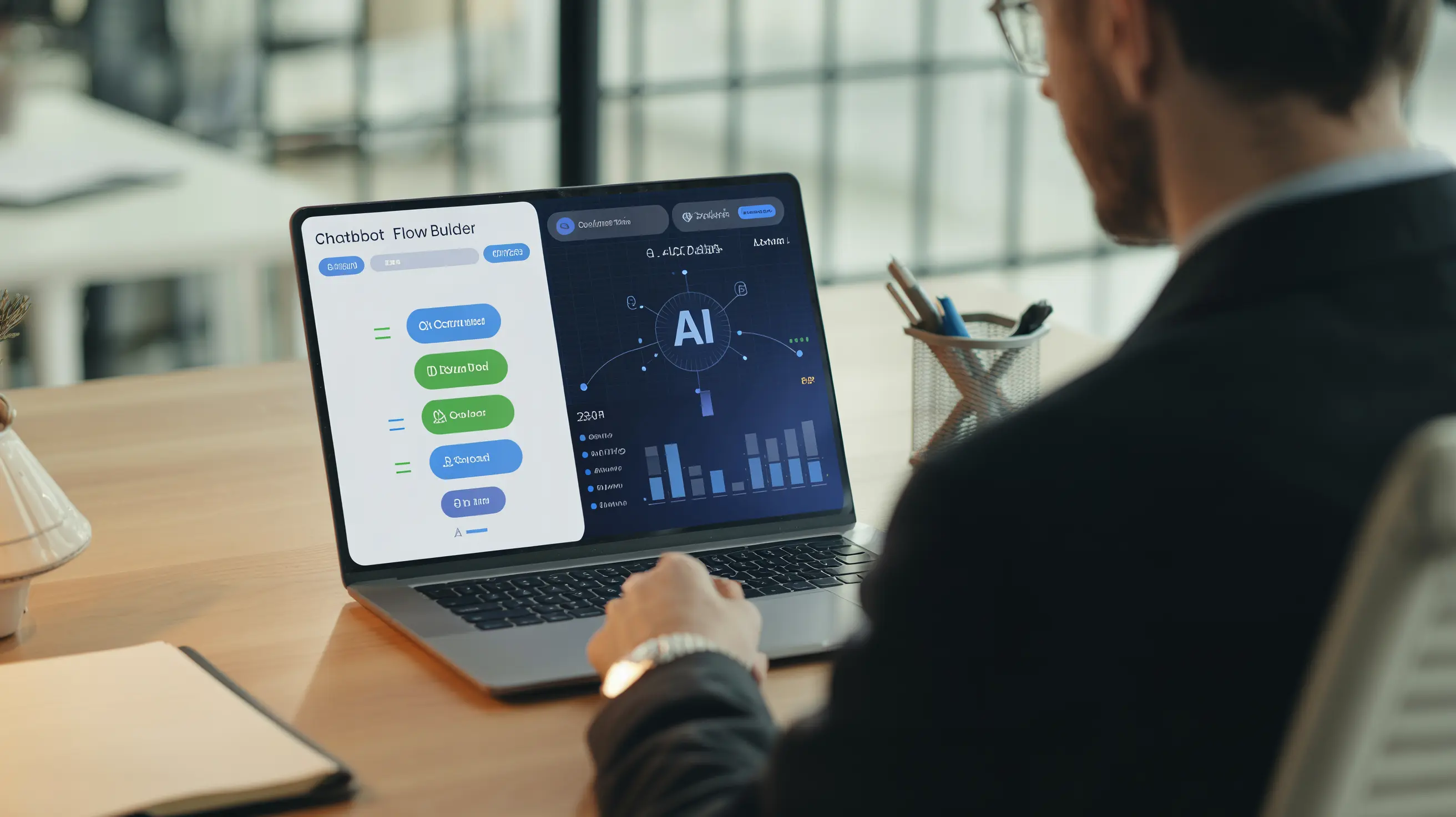
What Is a Code-Based Custom Chatbot?
A code-based custom chatbot is built using programming languages and AI frameworks. It is designed specifically for a business’s workflows, data, and systems.
These chatbots are created by developers.
How Code-Based Chatbots Work
Code-based chatbots use:
- Custom logic
- APIs and integrations
- AI and NLP models
- Backend systems and databases
They are flexible and scalable by design.
Common Use Cases for Code-Based Chatbots
Code-based chatbots are ideal for:
- Complex customer journeys
- AI-powered conversations
- Ecommerce and SaaS platforms
- Internal business automation
They are built for long-term use
Benefits of Code-Based Chatbots
- Full customization
- Advanced AI capabilities
- Deep system integrations
- High scalability
Limitations of Code-Based Chatbots
- Higher development cost
- Longer setup time
- Requires technical maintenance
However, these costs often pay off as the business scales.

Key Differences: No-Code vs Code-Based Chatbots
For small businesses and startups:
- No-code chatbots are often enough
- They help validate chatbot use cases
- They reduce upfront investment
However, once customer interactions grow, limitations appear.
Which Chatbot Is Better for Growing Companies?
Growing businesses usually benefit more from:
- Code-based custom chatbots
- Better customer experience
- Advanced automation
- Data-driven insights
Custom development prevents future rebuilds.
Cost Comparison: No-Code vs Code-Based Chatbots
No-Code Chatbot Costs
- Monthly subscription fees
- Feature-based pricing
- Costs increase with usage
Code-Based Chatbot Costs
- One-time development cost
- Maintenance and hosting
- Better long-term value
The cheaper option upfront is not always cheaper long term.
Integration Capabilities Matter
No-code chatbots usually support:
- Limited CRM tools
- Common messaging platforms
Code-based chatbots can integrate with:
- CRMs and ERPs
- Payment gateways
- Internal dashboards
- Custom databases
Integration needs often decide the final choice.
Data Ownership and Security
With no-code tools:
- Data lives on third-party platforms
- Control is limited
With code-based chatbots:
- You control data storage
- Security policies are customizable
This matters for regulated industries.
How to Decide: Simple Questions to Ask
Ask yourself:
- How complex are user conversations?
- Do I need AI or automation?
- Will chatbot usage grow over time?
- Do I need system integrations?
Clear answers lead to the right decision.
Common Mistakes Businesses Make
- Choosing no-code for complex needs
- Ignoring scalability
- Underestimating integrations
- Focusing only on short-term cost
Avoiding these mistakes saves time and money.
How 10 Turtle Builds Custom Chatbots
At 10 Turtle, chatbot development starts with understanding real business needs. Instead of forcing a tool, solutions are designed to fit workflows, scale smoothly, and integrate with existing systems
FAQs
Q-1. What is the main difference between no-code and code-based chatbots?
A-1. No-code chatbots use visual builders with limited flexibility, while code-based chatbots are fully customizable and scalable.
Q-2. Are no-code chatbots suitable for long-term use?
A-2. They work for simple needs, but growing businesses often outgrow their limitations.
Q-3. Do code-based chatbots use AI?
A-3. Yes. Code-based chatbots can use AI, NLP, and machine learning for advanced conversations.
Q-4. Which chatbot option is more secure?
A-4. Code-based chatbots offer better control over data security and compliance.
Q-5. Can I start with no-code and move to code-based later?
A-5. Yes, but rebuilding later can increase cost and complexity.
Q-6. Which chatbot is better for ecommerce websites?
A-6. Code-based chatbots are better due to integrations, personalization, and automation needs.
-1757572181151.webp)